With extensive expertise along the nuclear energy lifecycle, Laurentis has developed a niche when it comes to nuclear waste. Innovative research paired with real world commercial applications means Laurentis’s nuclear waste services are in a league of their own.
Laurentis’s low-level waste management services
Laurentis provides low-level waste (LLW) sorting and segregation services, placing material into reductive streams such as incinerable, compactable, metal, washable, and non-processable. This supports a reduction in the stored volume of a nuclear fleet’s byproducts, which directly impacts the amount of material needed to be stored as a regulated item, which in turn reduces a nuclear station’s operating costs.
Additionally, Laurentis removes material from waste that has been sorted and segregated to meet a very specific activity and geometrical criteria under its Material Release initiative. The material previously required to be maintained in a regulated space is confirmed to have no presence of contaminant and removed through conventional waste handling means. This removes items from the expensive regulatory process and places them back into conventional, lower-cost waste handling streams.
Driven by research and data, Laurentis’s waste management programs have handled more than 150,000 data points to date. Each data point represents specific activity measurements of low-level waste. It is the largest data set of LLW in North America.
CMSR: less is more
At the Hamilton Clean-Energy Materials Sorting and Recycling Initiative, Laurentis Energy Partners and McMaster University are working together to advance research and development in nuclear-energy innovations that reduce waste and support environmental solutions across the nuclear industry.
Hamilton Clean-Energy Materials Sorting and Recycling Initiative
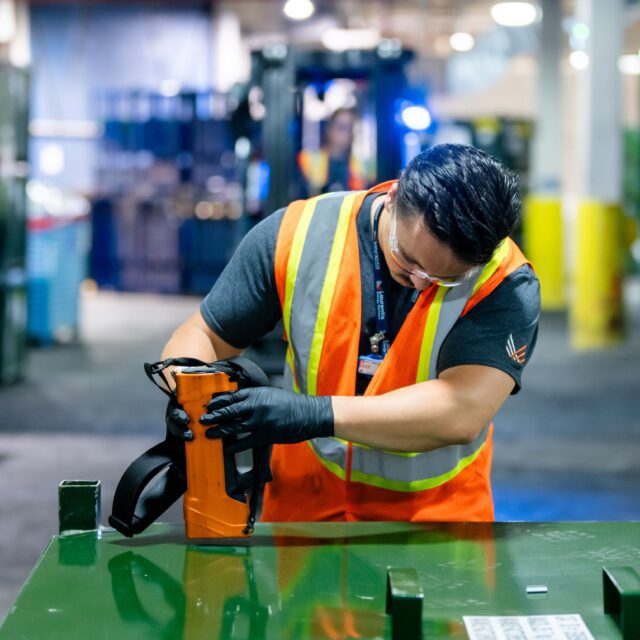
The Hamilton Clean-Energy Materials Sorting and Recycling Initiative (CMSR) is a joint research project between Laurentis and McMaster University in Hamilton, Ontario, that is making important strides in research and development that unlocks environmental solutions for nuclear clients. Technicians at the CMSR are focused on new techniques to process low-level nuclear byproducts. These materials include used worker garments, shoe covers and gloves, mops, and rags used in cleaning, small tools, and other industrial materials used in the nuclear industry. The technicians are discovering new methods and technologies, such as automated sorting and optimized radiation detection methods, to further sort and help divert more nuclear byproducts to re-use and recycling.
At the CMSR, technicians perform nuclear byproduct sorting and segregation research and operations, assessing materials gathered over the last 50-plus years that are currently destined for long-term storage. These materials are identified as items that can be sorted into reductive waste streams such as compatible, metal, incinerable, washables, and non-processible. This research-based initiative supports a reduction in the stored volume of Ontario's nuclear reactor fleets' byproducts, which directly impacts the amount of material needed to be stored in accordance with CNSC regulations. The result is a reduced amount of capital required to store the materials long term.
Since operations began in November 2020, CMSR staff have surveyed more than 20,000 cubic metres of material, achieving an average volume reduction of over 70 per cent through recategorization or recycling, and diverting eligible materials completely out of the waste stream.
Real world applications of the CMSR
Some of the innovations discovered at the CMSR are already being put to use at Laurentis’s new Western Clean-Energy Sorting and Recycling facility, where they are resulting in reductions in the volume of nuclear waste requiring disposal. Volume reductions lessen the need for new storage buildings, cut the cost of decommissioning stations, and reduce the amount of space needed in interim storage and eventual permanent disposal facilities.
The CMSR operates under a Nuclear Substance Radiation Devices licence from the Canadian Nuclear Safety Commission which allows the possession, use, transfer, and storage of nuclear substances.